
The open internet in 2026 is no longer what it used to be.
It was built on a simple promise: anyone, anywhere, could access information, publish ideas, and discover new perspectives without asking for permission. Early internet culture was imperfect, chaotic, and often unreliable — but it was also unusually open.
That openness is not disappearing in one dramatic moment. There is no universal blackout, no single switch being flipped. Instead, the internet is being reshaped quietly through ranking systems, moderation layers, platform dependency, and invisible algorithmic decisions.
That is exactly why the change is so easy to miss.
Open internet 2026 is no longer truly open. Algorithms, censorship, and Big Tech now shape what you see online more than ever before.
Is the Open Internet Still Open in 2026?
In theory, yes. In practice, much less than people assume.
Most users no longer explore the web directly. They do not jump from independent site to independent site the way people once did. They move through a handful of controlled gateways:
- search engines,
- social media feeds,
- recommendation systems,
- video platforms,
- app ecosystems.
These systems do not simply organize information. They rank it, frame it, suppress it, and prioritize it according to goals that often have little to do with truth, public value, or intellectual diversity.
That means the modern web is no longer experienced as an open map. It is experienced as a curated stream.
The New Gatekeepers of Information
The original internet reduced the power of traditional gatekeepers. In 2026, new gatekeepers have taken their place.
Instead of editors alone deciding what becomes visible, we now have platforms and machine-driven systems making those decisions at massive scale. A page can still exist online and yet be practically invisible. A video can remain published and still be buried. An article can be technically accessible and still never meaningfully reach its audience.
This is one of the defining realities of the open internet 2026: visibility is no longer neutral.
Algorithmic Censorship: Control Without a Warning Label
Traditional censorship is obvious. A government blocks a domain. A service shows an error message. A publication is removed. Modern internet control is often far more subtle.
No alert appears. No official notice is shown. Instead, content is downgraded, de-amplified, filtered, or quietly excluded from recommendation flows.
This is what many people now call algorithmic censorship.
It can happen through:
- search ranking manipulation,
- feed suppression,
- recommendation bias,
- shadow deprioritization,
- automated moderation systems.
Content does not need to be deleted to disappear. It only needs to become difficult to find.
And for most users, what cannot be easily found effectively does not exist.
The Internet Is Still Vast — But Your Version of It Is Narrow
One of the biggest illusions of modern digital life is the feeling of abundance. Users feel surrounded by content at all times. There is always more news, more video, more opinion, more reaction, more updates.
But abundance is not the same as openness.
You can consume endless content while still living inside a very narrow informational corridor. The fact that a feed is active does not mean it is broad. The fact that search results appear does not mean they are neutral. The fact that platforms feel convenient does not mean they are free spaces.
In other words, users are not necessarily seeing the internet. They are seeing a version of the internet.
The Concentration of Power
The web was designed as a distributed network. The reality of 2026 looks far more centralized.
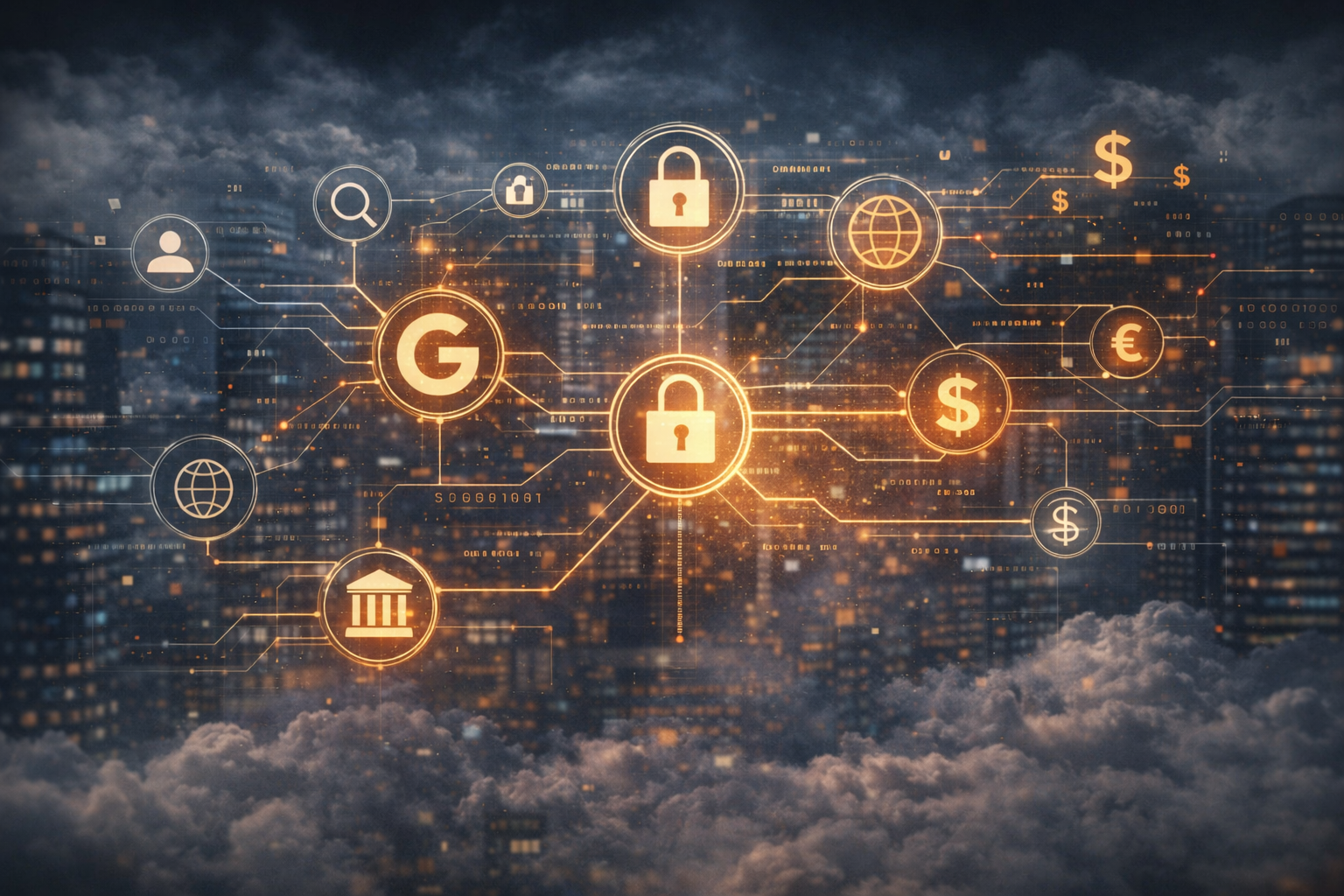
A relatively small number of powerful companies now influence what people can discover, publish, monetize, and trust. Search visibility, platform reach, infrastructure dependency, cloud hosting, app store access, and algorithmic exposure are concentrated in fewer hands than many users realize.
That concentration creates a serious structural problem.
If access to information depends on a handful of private systems, how open is the internet really?
Government Censorship Is Still Real — But It Is No Longer the Whole Story
When people hear the word censorship, they often imagine a government blocking websites at the national level. That still happens, and in many countries it is intensifying. But the story no longer ends there.
In 2026, information control usually operates through multiple overlapping layers:
- government censorship through blocking, licensing pressure, or legal restrictions,
- platform moderation through removal, labeling, or reduced reach,
- algorithmic filtering through ranking and recommendation systems,
- infrastructure pressure through hosting, payment, or service dependency.
Together, these mechanisms create a more flexible and often more effective form of control than old-style blunt censorship alone.
If you want to understand the technical side of this in more detail, read our related guide: How Governments Block Websites in 2026 (How to Bypass It).
The Role of Search Engines in the Open Internet 2026
Search engines still matter enormously. They remain one of the main ways people discover information outside social platforms. But their role has changed.
Search is no longer just about matching queries with pages. It increasingly reflects policy choices, quality scoring systems, trust models, location-based filtering, platform authority, and commercial logic.
This means smaller independent publishers face a difficult challenge. Even when they produce useful, original, and valuable work, they often compete against institutional scale, legacy authority, and algorithmic preference for already dominant domains.
That does not make independent publishing impossible. It makes it harder — and more strategically important.
The Impact on Journalism
This shift has enormous implications for journalism.
Independent journalism used to struggle mainly with funding and distribution. Today it must also struggle with discoverability. Important reporting may exist online and still fail to reach the people who need it most. Investigative content can be technically available while remaining practically marginal.
That changes the nature of publishing itself.
Writers and journalists are increasingly pushed to think not only like reporters, but also like platform tacticians. Visibility becomes part of the battle. Headlines are shaped for ranking. Topics are chosen with platform behavior in mind. Distribution strategy becomes nearly as important as truth itself.
That is not a healthy information environment.
Alternative Spaces and the Search for Autonomy
As mainstream online spaces become more managed and filtered, users are naturally looking for alternatives. Some turn to privacy-first tools. Some seek direct publishing platforms. Others explore networks outside the standard commercial web.
The so-called dark web is one example — often sensationalized, frequently misunderstood, but still important in any serious conversation about internet freedom and access beyond conventional visibility systems.
It reflects a broader demand: people want spaces where information is not constantly shaped by platform incentives.
For a clearer introduction, see: Dark Web: What It Is, How It Works & How to Stay Safe.
The Investor and Platform Perspective
This is not only a political or technical issue. It is also a strategic business issue.
As trust declines and users become more aware of hidden filtering, the value of credible independent platforms can rise. That creates real upside for projects built around transparency, editorial seriousness, and long-term authority instead of short-term viral noise.
In that sense, the future of digital publishing may not belong only to the biggest platforms. It may also belong to brands that build trust by being clear about what they are, what they publish, and why they exist.
Traffic matters. But in the next phase of the internet, trust may matter even more.
Why the Open Internet 2026 Matters to Ordinary Users
This topic is not abstract.
It affects how people understand politics, science, privacy, technology, culture, and even their own rights. If the systems shaping visibility are opaque, then public understanding becomes easier to steer than most people think.
That is why the decline of the open internet is not just a story about websites. It is a story about perception itself.
What people are able to see influences what they believe is happening. What they never encounter may never enter their moral or political imagination at all.
What Users Can Do
The good news is that responding to this shift does not require being a programmer or a cybersecurity expert. It starts with awareness.
Users can take practical steps:
- use multiple sources instead of relying on one feed,
- bookmark independent websites directly,
- question what is being amplified and what is missing,
- support trustworthy independent publishers,
- learn how access restrictions actually work.
The goal is not paranoia. The goal is literacy.
Once you understand that digital visibility is shaped, not neutral, you begin to interact with the internet differently.
Why WithoutCensorship Exists
WithoutCensorship was not created to become just another content site chasing clicks inside an overcrowded algorithmic system.
It was built as a response to a changing digital environment — one where openness is increasingly constrained by hidden systems, centralized control, and platform dependency.
The mission is simple:
to publish useful, independent, and accessible content for people who still believe information should remain reachable.
That means practical guides, serious analysis, and a platform for voices that do not want to be reduced to algorithm-friendly noise.
Final Thought
The internet is not dead.
But the open internet is under pressure.
What once felt naturally accessible now often sits behind layers of ranking, moderation, curation, and quiet suppression. The change is not always dramatic enough to trigger alarm. That is exactly what makes it effective.
The real question is no longer whether the internet still contains information.
The real question is who controls what you see online — and how much of that control you are willing to ignore.
Because the future of the internet will not only be defined by what is published. It will also be defined by what remains visible, reachable, and discoverable.
Further Reading
Have a real story?
Submit your story here
If you have evidence of censorship, deplatforming, blocked access, or media suppression, send your article, documentation, or video-based story for review. Submit Your Story